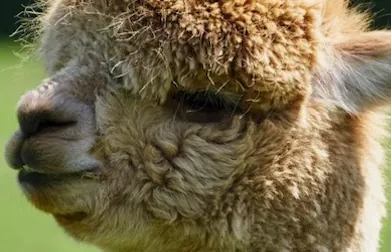
Alpaca care starts with company, suitable forage, clean water, secure fencing and shelter. Add regular shearing, foot and dental checks, and a health plan made with a veterinarian who treats camelids. For owners in the Southeastern US, summer heat, parasites and poisonous plants deserve particular attention.
A full hay rack tells you little about the animal that has stopped coming to it. Good care means knowing each animal well enough to notice a change, then having the facilities and veterinary support to act. This guide covers the everyday work of keeping adult alpacas and llamas; our cria care guide covers birth and the first months.
An animal is unwell now?
Difficulty breathing, collapse, a new wobble or suspected plant poisoning calls for prompt veterinary advice. Go straight to when to call the vet. A care calendar is not a reason to wait.
Company, space and fencing: plan before they arrive
Do not buy one alpaca to keep alone. Texas A&M recommends that first-time owners start with at least two compatible adult alpacas. A horse or goat is not a dependable substitute for an alpaca companion. Ask the breeder which animals already get along, and arrange veterinary care before buying: not every livestock practice treats camelids. [1]
Put these questions on your pre-purchase list: Who covers emergencies? How will you bring an animal into a pen for examination? Where will you keep newcomers while following your vet's introduction plan? Who can look after the herd when you are away? Our guide to buying alpacas helps with the wider decision.
How much land do alpacas need?
There is no reliable stocking rate for every property. Pasture production, drainage, season and supplemental feeding change what a field can support. Match animal numbers to the land rather than treating an acreage estimate as a guarantee of year-round feed. Ask your county Extension office to help assess the pasture. [2]
What fencing do alpacas and llamas need?
Typical containment heights are about 4 ft (1.2 m) for alpacas and 5 ft (1.5 m) for llamas; avoid barbed wire. These heights do not guarantee predator or deer exclusion. [3] Have the whole enclosure assessed for local hazards and predator pressure. [4]
What do alpacas and llamas eat?
Pasture and hay should provide most of the diet. Nutritional needs change with growth, pregnancy and milk production. A larger llama also needs a different total amount of feed from a smaller alpaca; one fixed number of pounds per animal is a poor feeding plan. Rutgers recommends discussing feeding questions with a local Extension adviser. [5]
Merck gives maintenance guidelines of 10–14% crude protein grass hay and intake of 1.8–2% of body weight daily as dry matter (feed excluding water). Have a professional adapt these figures to the animal. [3]
Ask your adviser to connect the hay analysis, the animal's weight and its body condition. Record the amount offered and what remains. This is more useful than judging a bale by its size or assuming an animal under thick fleece is well fed.
Read the feed label before filling the bucket
Ionophores such as monensin, used in some livestock feeds, are highly toxic to camelids. Do not substitute cattle feed for an appropriate camelid ration. Review minerals and supplements together with your vet: overlapping products can supply excessive copper. [3]
Write the approved feed names and amounts where a relief caretaker can find them. Include what the animals must never be given. A clearly labeled feed bin is more useful than an instruction remembered from a conversation.
Shelter and water: make them usable by the whole herd
A three-sided shelter can provide a winter windbreak and summer shade. Its position matters as much as its size. [5] Each animal needs access to shelter, including less dominant herd members; young animals need particular protection from cold. [6]
Walk the enclosure in the afternoon, when you can see where the shade actually falls. Check the route from grazing to water and shelter. A design that looks generous on a plan may put every resource in one congested corner.
Keep drinking water clean and available. Alpacas may stand in troughs to cool themselves and foul the water, so look inside the trough rather than simply checking that it is full. [2] Put water checks on the caretaker's daily list, along with gate checks and the head count.
Heat stress: prepare for hot, humid weather
Heat stress is a veterinary emergency. Heavy fleece, humidity, obesity and crowding can increase risk. Warning signs include open-mouth breathing, shaking, foaming, weakness and collapse. Merck lists a usual temperature range of 99–101.8°F (37.2–38.8°C), but do not wait for a particular thermometer reading when an animal is struggling. [7]
Plan shearing before hot weather, provide shade and airflow, and schedule handling for cooler hours. [6] Make a hot-weather plan before you need it: who checks the animals, who calls the vet, and where an affected animal can be moved safely.
If heat stress is suspected, call your vet immediately and reduce heat exposure while following their instructions. Merck describes cooling measures including air conditioning, clipping and ice packs. It specifically warns against soaking an unshorn animal's full fleece because this can retain heat. Ask your vet how to cool your particular animal safely. [7]
Meningeal worm and intestinal parasites need different plans
Meningeal worm (Parelaphostrongylus tenuis) involves white-tailed deer and snail or slug hosts. In an alpaca or llama, migrating larvae can damage the nervous system. Risk depends on local exposure and habitat; it is not identical on every Southeastern farm. New stumbling, hind-leg weakness or trouble rising warrants an urgent call, even if the animal is still eating. [8]
Discuss deer access, damp areas and preventive medication with your vet. Do not replace an established prevention plan with a schedule from an article. The AOA review also discusses resistance in other parasites exposed to dewormers, which is one reason prevention and treatment need a whole-herd plan. [8]
For intestinal parasites, arrange fecal testing and treatment decisions with your practice. Texas A&M notes that pasture-kept alpacas will not necessarily have zero parasite eggs in every sample; the findings need interpretation. [1] Keep the test date, result, prescribed treatment and follow-up together in the animal's record. A product purchase alone does not tell you whether a parasite problem is controlled.
Shearing, toenails, teeth and vaccinations
Shearing
Arrange shearing around the animal's coat and your climate. Alpacas are generally shorn annually; a llama's needs vary with its fleece. The welfare purpose is to manage heat as well as fiber. [9] [6] Book a suitable handler in advance and discuss any animal whose health or pregnancy needs extra care. See our alpaca wool guide for the fiber side.
Toenails
Each foot has a soft pad and two nails. Growth and wear vary, so inspect feet regularly rather than waiting for a fixed trimming date. Overgrown nails can distort the foot and cause lameness. Have an experienced person demonstrate safe restraint and trimming; cutting too deeply can cause bleeding. [9]
Teeth and fighting teeth
Alpacas have lower front incisors that meet an upper dental pad. Misaligned or overgrown incisors can interfere with grazing. Males can also develop sharp fighting teeth capable of injuring other animals. Ask your veterinarian to assess the mouth and decide what needs attention; tooth work requires a trained, competent person. [2]
Vaccines
In US camelid practice, CD&T refers to protection against Clostridium perfringens types C and D and tetanus. Tufts discusses this vaccination alongside rabies prevention. Your local veterinarian should choose products and timing for your herd, age groups and exposure. A protocol written for another region is not automatically suitable for yours. [10] [5]
Before a visit, prepare each animal's identification and treatment history. Ask the vet to leave a written plan with the next due dates and what to do if a dose is missed. Keep that plan with the daily care instructions.
Poisonous plants: check beyond the pasture
A hedge outside the fence can become a feed hazard when someone throws its trimmings into the paddock. Keep garden waste out of animal enclosures, and ask your local Extension office to identify uncertain plants. The Rocky Mountain Llama and Alpaca Association highlights both access to landscaping and discarded prunings as concerns. [11]
| Plant | What to check | Owner action |
|---|---|---|
| Azalea Rhododendron spp. | Garden beds and branches within reach. | Prevent access; treat suspected eating as a reason to call the vet. |
| Rhododendron Rhododendron spp. | Shrubs beside fences and discarded cuttings. | Keep the plant and its prunings away from animals. |
| Mountain laurel Kalmia latifolia | Wooded boundaries and landscaping. | Identify it before opening a new grazing area; prevent browsing. |
| Oleander Nerium oleander | Ornamental shrubs; green or dried leaves and twigs. | Exclude all clippings. Dried material is not safe feed. |
Tufts lists azalea, rhododendron and mountain laurel among toxic-plant exposures requiring an immediate call. NC State lists green and dried oleander leaves and twigs as poisonous livestock material; published case reports also document oleander poisoning in llamas and an alpaca. [10] [12] [13]
If an animal may have eaten a poisonous plant, call your vet promptly. Prevent further access if you can do so safely. Take clear photos and note what was eaten and when. Ask the vet what samples would help; do not delay the call while trying to identify the plant yourself. Tell anyone maintaining the property where garden waste must go.
Body condition: put your hands under the fleece
Fleece can hide weight loss. Regular hands-on checks, weight records and observation of eating, droppings and behavior help you and your veterinarian spot changes. Oklahoma State emphasizes this kind of routine monitoring because camelids can conceal illness. [14]
Use the scoring system your vet teaches you and write down which one it is. Merck uses a 1–9 body-condition scale, while the Australian Alpaca Association describes a 1–5 scale. A score of “3” means something different in each. [3] [2]
A simple record can have six columns: date, animal ID, weight, condition score and scale, observation, action. “Looks thin” is hard to compare next month. A dated score using a consistent method gives your vet something more useful.
A practical alpaca and llama care calendar
Use this as an organizer alongside your herd's veterinary plan. The observation intervals below are suggested routines, not fixed medical schedules.
| When | What to put on the list |
|---|---|
| Every day | See every animal; check appetite, movement and behavior. Inspect water, feed, gates and access to shelter. |
| Regularly, such as monthly | Record weight and hands-on body condition. Look at feet and note animals needing a closer examination. |
| Before hot weather | Confirm shearing arrangements, shade, airflow and the hot-weather response plan. |
| At the dates your vet sets | Vaccinations, fecal tests, parasite prevention, follow-up tests and dental care. |
| After storms or landscaping | Walk boundaries; check damaged fences, fallen vegetation and discarded cuttings before allowing access. |
| Before an absence or trip | Hand over feed instructions, animal records and emergency contacts. Confirm transport arrangements if needed. |
For travel preparation and health paperwork, use our alpaca transport guide. For nearby breeders, see the Southeast farm directory; a breeder can be a useful practical contact, while diagnosis and treatment belong with your veterinarian.
When to call the vet
Call promptly for a sudden change
- Breathing difficulty, collapse or inability to rise
- Stumbling, circling or a new change in coordination
- Refusing food, marked lethargy or signs of pain
- Straining to urinate or suspected urinary blockage
- Suspected poisonous-plant ingestion or access to the wrong feed
These are reasons to seek advice, not a diagnosis checklist. Tell the practice which animal is affected, when it was last normal, what changed and any recent feed or treatment changes. Take a temperature only if you can do so safely and it will not delay urgent help. [10] [7]
Sources and editorial notes
Prepared by the SEAA website team using the veterinary, university and association sources below, checked October 23, 2026. This is general owner education, not an individual veterinary assessment. Australian references support husbandry details; vaccination and parasite plans must be set locally.
- Texas A&M: First-Time Alpaca Ownership — veterinary access, companions and parasite assessment.
- Australian Alpaca Association: Alpaca care — pasture, water, teeth and body-condition scoring.
- Merck Veterinary Manual: Management of Llamas and Alpacas — fencing, nutrition, feed hazards and condition scoring.
- NSW Department of Education: Alpacas — environment — enclosure safety and shelter.
- Rutgers Cooperative Extension: Llamas and Alpacas, FS917 — feeding, shelter and local veterinary planning.
- Extension: Camelid Welfare FAQs — access to shelter and climate-dependent shearing.
- Merck Veterinary Manual: Diseases of Llamas and Alpacas — heat stress and emergency cooling considerations.
- Alpaca Owners Association: Meningeal Worm Literature Review — exposure, neurological signs and prevention considerations.
- Australian Alpaca Association: Routine Husbandry (PDF) — toenails, handling and shearing.
- Tufts Veterinary Field Service: Individual Animal Care — urgent signs, toxic plants and vaccination.
- Rocky Mountain Llama and Alpaca Association: Poisonous Plants — landscaping, prunings and plant identification.
- NC State Extension: Common Poisonous Plants Found on NC Pastures — regional livestock plant hazards.
- Oleander intoxication in New World camelids: 12 cases — published veterinary case series.
- Oklahoma State University: Camelid Care — ongoing herd-health monitoring.