Alpaca heat stress is a veterinary emergency. Fast or open-mouth breathing, weakness, trembling, foam around the mouth, or collapse during hot weather mean an alpaca needs immediate attention. Call a veterinarian experienced with camelids, move the animal into a cool, well-ventilated area if it is safe to do so, and begin cooling under veterinary guidance. Prevention starts before summer: timely shearing, reliable shade, drinking water, airflow, and frequent observation.
Hot and humid conditions deserve special attention on alpaca farms in the southeastern United States. High humidity makes heat harder to shed, and a dense fleece, illness, crowding, obesity, or handling stress can push an animal beyond its ability to cool itself. This guide focuses on recognizing danger, reducing summer risk, and preparing a practical response—not on diagnosing or treating an individual animal without a veterinarian.
How to Recognize Heat Stress in Alpacas
Normal behavior varies with the animal, the weather, and activity. A resting alpaca that suddenly breathes much faster than its herd mates on a hot day warrants immediate attention. Do not wait for every classic sign to appear.
| What you notice | Why it matters | What to do |
|---|---|---|
| Unusually rapid breathing, flared nostrils, reduced appetite or unusual lethargy | Possible early overheating; other illnesses can look similar | Move to a cooler area, assess the animal and contact a camelid veterinarian promptly |
| Open-mouth breathing, trembling, foam around the mouth, staggering or marked weakness | Serious warning signs associated with heat stress | Treat as an emergency: call the vet immediately and start veterinarian-directed cooling |
| Collapse, altered awareness, seizures or very little urine | Possible severe systemic illness and organ injury | Emergency veterinary treatment; do not delay for home remedies |
Important: A temperature reading helps the veterinarian assess the situation, but it is not safe to rely on a single numerical cutoff or to assume that an apparently calmer animal is out of danger. Merck Veterinary Manual describes body temperatures above 102°F (38.9°C) in affected animals, sometimes rising much higher; its normal reference range is approximately 99–101.8°F (37.2–38.8°C). Measurements should be interpreted with the animal's condition and the veterinarian's advice.
What to Do if an Alpaca Is Overheating
- Call a camelid-experienced veterinarian immediately. Give your location, the animal's symptoms, weather conditions, shearing status and any measured temperature. Heat stress can progress to multi-organ injury.
- Move the animal out of direct heat. If moving it will not cause more distress, use a shaded, ventilated space or an air-conditioned building. Avoid unnecessary chasing, restraint or transport delays.
- Start careful cooling while following veterinary instructions. Direct fans toward the animal and use cool packs protected by a cloth on the body's core areas when advised. If the animal is heavily fleeced, prompt clipping may be necessary; have an experienced person or veterinarian direct it.
- Do not soak a densely fleeced, unshorn alpaca from head to back. Wet fleece can trap heat. Ask your veterinarian about cooling exposed or sparsely fleeced areas such as the lower belly and legs instead.
- Monitor closely and arrange veterinary examination even if the animal improves. A camelid may deteriorate after seeming to recover. Veterinary teams may need to monitor body temperature, hydration, kidney function and other complications.
Do not force water into the mouth of a weak, confused or collapsed animal. Keep fresh drinking water available for an alert animal that can drink normally, but do not postpone the veterinary call while trying oral treatments.
Veterinary cooling requires monitoring to prevent overcooling. Merck describes ending intensive cooling around 102°F (38.9°C) in a monitored patient; this is not a substitute for an individualized veterinary treatment plan.
Why Alpacas Can Struggle in Hot Weather
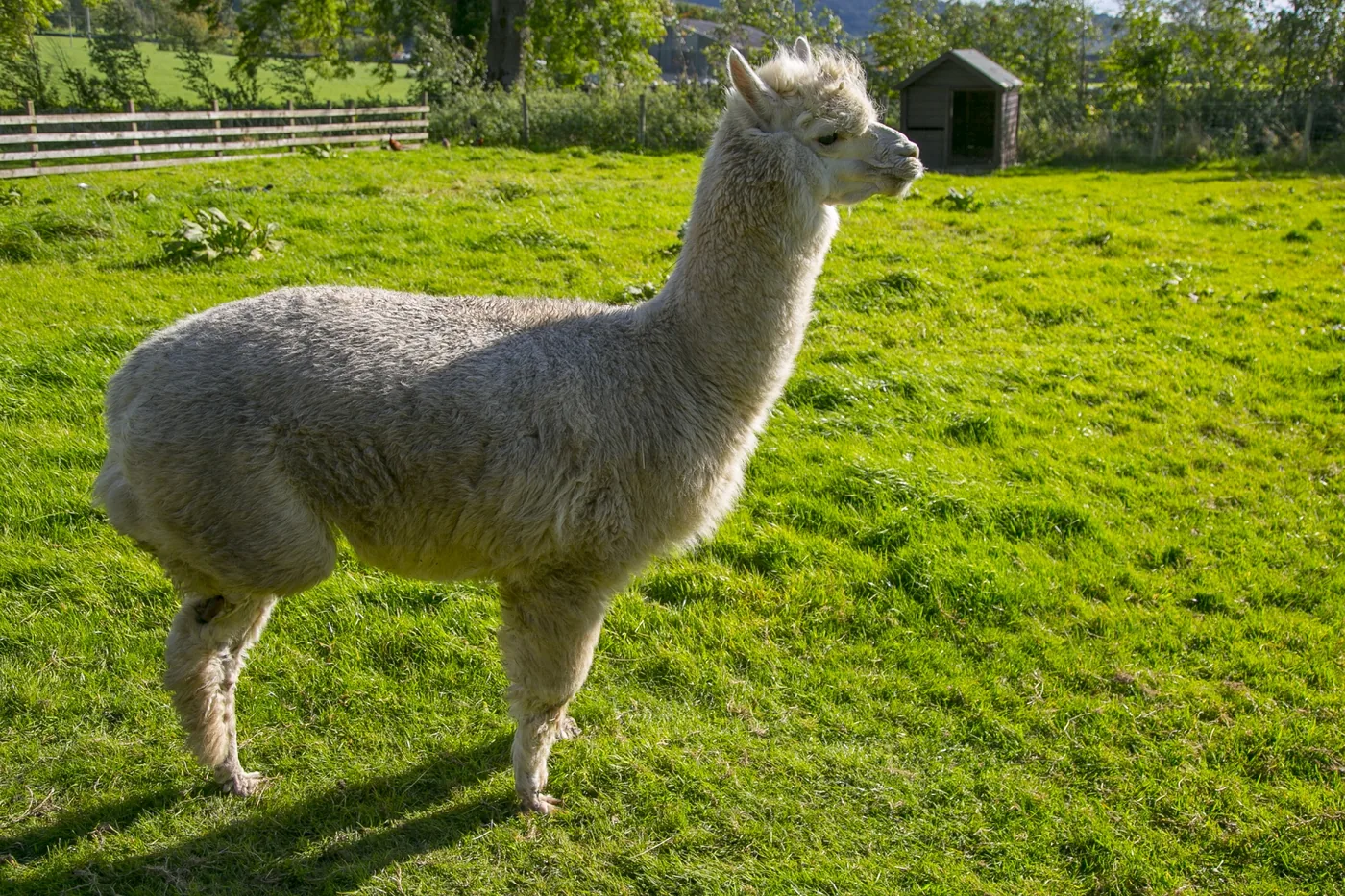
Alpacas evolved in the high Andes and grow a valuable insulating fleece. That fleece is useful in cold weather but becomes a disadvantage during prolonged summer heat, particularly when humidity limits cooling. The problem is not simply the number on the thermometer: coat length, shade, ventilation, access to water, animal health and physical activity all change the risk.
Fleece and shearing
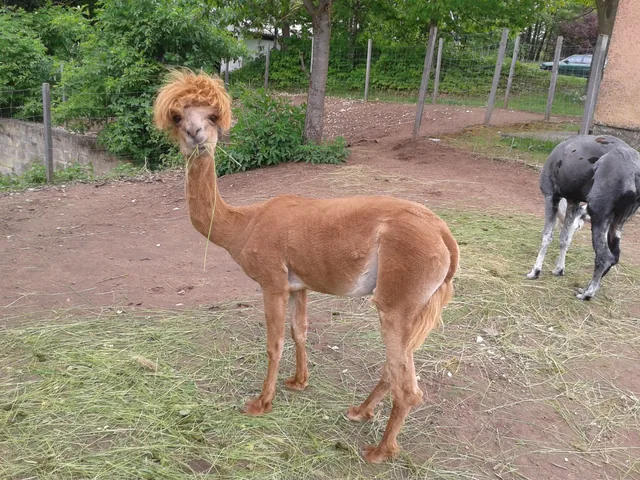
Timely shearing is one of the most important preventive measures. Merck Veterinary Manual states that camelids often struggle with heat and need fiber removed before hot weather. An incomplete “barrel cut” may help in some circumstances, but some animals need fuller shearing for adequate comfort. Shearing technique matters because inexperienced clipping can cause cuts, burns or sun exposure. See our detailed alpaca shearing guide for preparation and aftercare.
Health, handling and herd conditions
Excess body condition, underlying illness, stress and overcrowding raise heat-stress risk. So can transport, showing, breeding activity or prolonged handling during hot parts of the day. Plan routine work for the coolest practical hours and consult a veterinarian if an animal has been unwell, is pregnant, or is recovering from an illness.
Alpaca Summer Care: A Practical Prevention Checklist
Good summer management combines several layers of protection. No single fan, shelter or water trough makes a hot paddock safe on its own.
| Priority | Farm check |
|---|---|
| Before hot weather | Arrange appropriate shearing early enough for local conditions; inspect shade structures, fans and water systems |
| Every morning | Confirm several accessible sources of clean drinking water and shaded resting space for the whole herd |
| During the hottest hours | Observe breathing, posture and activity; verify fans run safely and shaded areas remain usable as the sun moves |
| Handling and travel | Avoid unnecessary restraint, exercise, trailer delays and routine procedures during peak heat |
| At-risk individuals | Watch heavily fleeced, older, ill, overweight, or recently moved animals especially closely |
| Emergency readiness | Keep the camelid veterinarian's number, thermometer, transport arrangements and a cooling plan accessible |
Shade that actually works
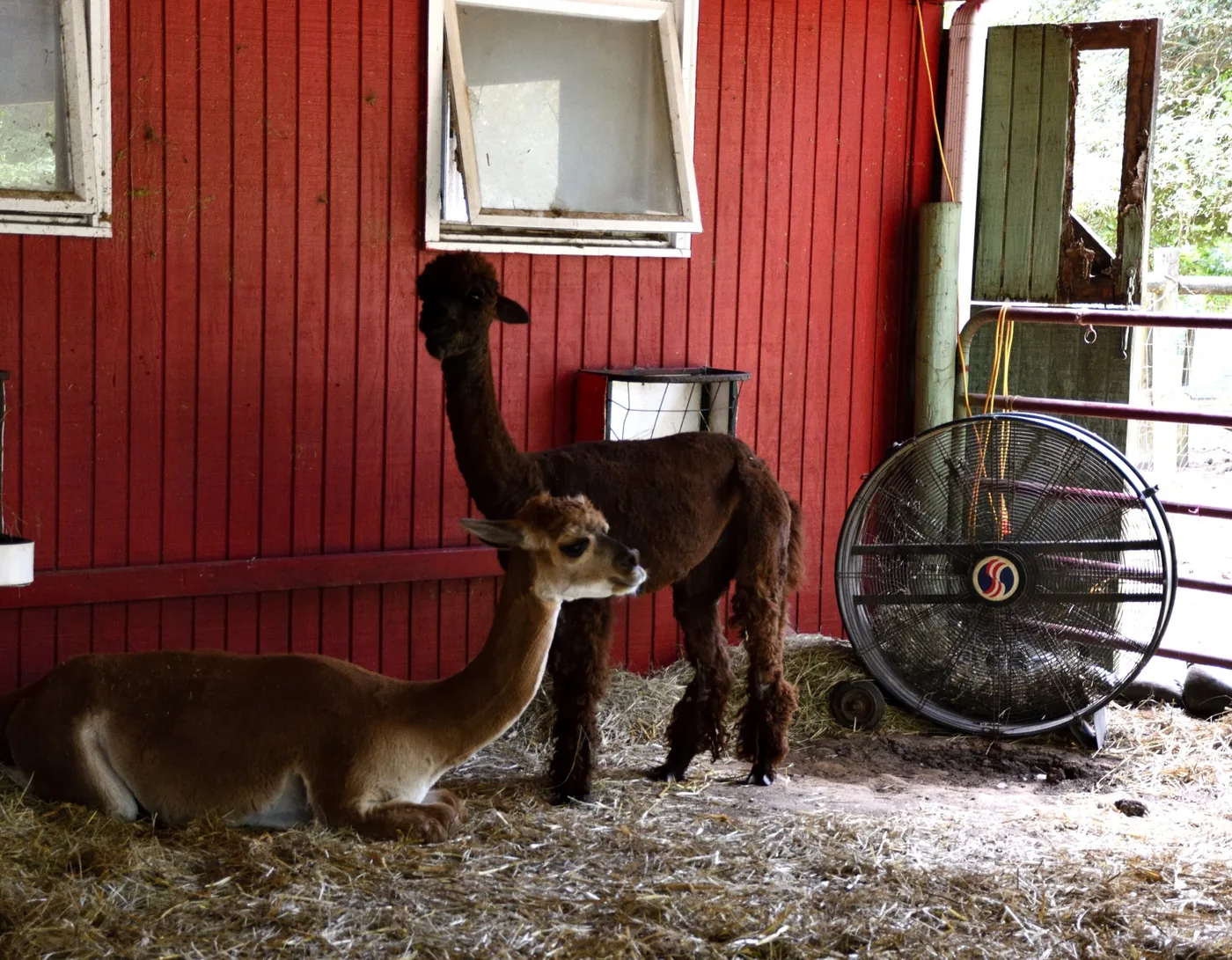
Provide shade large enough for the entire herd without crowding. Check it during the afternoon, not only in the morning: shade moves. Good airflow is vital. A roof that blocks direct sun but traps stagnant air may still leave animals uncomfortable. Inspect that fans and electrical fixtures are suitable for livestock environments and mounted out of reach.
Water, wetting and cooling areas
Clean drinking water should be consistently available. Cooling strategies must avoid trapping heat inside wet fleece. Guidance from alpaca organizations recommends targeting sparsely fleeced areas such as the legs and underside, rather than soaking the topline of a heavily coated animal. Deep cooling pools have been used in camelid husbandry, but safety, hygiene and herd behavior need to be assessed for each property. A veterinarian can help select an appropriate method for your climate and animals.
Do not rely on a fixed “safe temperature”
There is no universal outdoor temperature at which every alpaca is safe or unsafe. Humidity, direct sun, fleece, wind, health and activity interact. An ordinary warm afternoon may be more stressful for a heavily fleeced or sick animal than a hotter but dry and breezy day is for a recently shorn, healthy one. Observe the actual herd instead of trusting one weather-app number.
Special Considerations for Southeastern U.S. Alpaca Farms
From Florida and Georgia through the Carolinas, Alabama, Mississippi and Tennessee—and into Kentucky and Virginia—summer management has to account for periods of high humidity as well as heat. The Southeast's weather can change rapidly: an overcast morning can turn into a still, hot afternoon. Farms should maintain a plan that works even when wind is absent or electrical power fails.
Before summer, walk the paddock at the time of day when it will be hottest. Identify where the herd can find shade, whether air moves through the shelter, where the nearest usable water sources are, and how you would safely move a distressed animal. Establish a relationship with a veterinarian familiar with alpacas before an emergency, and know where after-hours help is available.
This guide concentrates on heat illness. For daily husbandry, feeding, parasite discussions and shelter planning, use our alpaca care guide and alpaca feeding guide. If animals must travel in warm weather, also review transporting alpacas.
Frequently Asked Questions
Can alpacas live in hot climates?
Yes, alpacas are kept in warm regions, but appropriate shearing, shade, ventilation, reliable water and close monitoring are essential. High humidity and a thick coat increase heat stress risk.
How can you tell if an alpaca is too hot?
Watch for unusually fast breathing, lethargy, flared nostrils and reduced activity. Open-mouth breathing, trembling, foaming, disorientation or collapse are emergency warning signs. Contact a veterinarian immediately if heat stress is suspected.
Should I hose down an overheated alpaca?
Do not indiscriminately saturate thick, unshorn fleece; it can retain water and heat. Follow a camelid veterinarian's instructions for cooling and consider the condition of the coat and the animal.
Does shearing prevent all heat stress?
No. Shearing reduces an important risk, but heat, humidity, illness, crowding, poor airflow and handling stress can still cause problems. Shade, water, ventilation and observation remain necessary.
Is an alpaca safe after it stops panting?
Not necessarily. Severe heat stress can cause delayed complications even after an animal initially appears better. A veterinarian should evaluate a suspected case and advise monitoring.
Bottom line: summer heat management is part of responsible alpaca ownership. Prepare before the first heat wave, pay attention to behavior changes, and treat suspected heat stress as a medical emergency rather than a wait-and-see problem.