How do you transport alpacas safely? Before an interstate trip, confirm the destination state's entry rules with an accredited veterinarian or state animal health office; prepare any required Certificate of Veterinary Inspection (CVI), identification, testing, or entry permit; and use a secure, well-ventilated livestock vehicle. Practice calm loading, carry water and emergency supplies, and avoid hot, humid travel conditions. Alpaca shows can impose additional paperwork and health requirements.
Alpaca transport checklist: before you leave
Use this checklist for a farm move, veterinary appointment, sale, or show. The precise paperwork and timing depend on where you are going and why.
| When | What to do | Why it matters |
|---|---|---|
| As soon as you plan the trip | Check the destination state's camelid entry rules; ask the show or receiving farm for its requirements. | Testing, ID, permit rules, and CVI validity vary. |
| Well ahead of departure | Book an accredited veterinarian, verify microchips or other accepted ID, and schedule any required tests. | Some tests and paperwork take time. |
| Several days ahead | Inspect trailer floor, ramps, doors, ventilation, tires, hitch, and lights; practice short, calm loading sessions. | Prevents avoidable injuries and delays. |
| Day before | Review forecast and route, prepare water, familiar hay, halters, first-aid supplies, documents, and emergency contacts. | Heat, traffic, and mechanical problems can change plans. |
| Before loading | Confirm the animals are fit to travel and compatible with their companions; verify all latches and partitions. | Stressed or unwell animals may need a different plan. |
Alpaca health certificates and interstate transport requirements
For transporting alpacas across state lines, the destination state's animal health rules are the starting point. A Certificate of Veterinary Inspection (CVI), commonly called a health certificate, is often required. Do not assume that a certificate valid for one trip or state will automatically be accepted elsewhere. Your accredited veterinarian can verify the requirements in effect for your animals and route.
| Possible requirement | What to confirm before departure |
|---|---|
| Certificate of Veterinary Inspection | Whether one is required, which form is accepted, when the examination must occur, and how long the document remains valid. |
| Identification | Whether a microchip or another form of official identification is required, and how each animal must be listed on the CVI. |
| Laboratory tests | Any disease-specific tests, acceptable methods, animal age thresholds, and timing windows. |
| Entry permit | Whether the receiving state requires an authorization number on the certificate. |
| Show or sale rules | Requirements imposed by the event or receiving premises in addition to state entry rules. |
When a CVI is required, it generally records the owner, origin, destination, purpose of movement, animals, identification, and applicable test results. Ask the issuing veterinarian to verify the information before the trailer leaves. These are categories to check, not a universal legal checklist for all nine southeastern states.
Moving an alpaca within one state may involve different rules from crossing a state line. Check local requirements, especially when attending a sale, show, or other gathering.
How to check rules for a southeastern destination
For Alabama, Florida, Georgia, Kentucky, Mississippi, North Carolina, South Carolina, Tennessee, or Virginia, identify the destination state's animal health office, ask about camelid entry rules, and confirm them again close to departure. Your accredited veterinarian can help determine whether a CVI, entry permit, identification, or testing is needed. Avoid relying on an older farm forum post for a current rule.
Transporting alpacas to shows
Show rules can be stricter than state entry requirements. For AOA-certified shows, the published 2026 show handbook requires a CVI issued no more than 30 days before the last day of the show, including companion alpacas. It also requires BVDV PCR testing documentation. The handbook indicates that a qualifying lifetime BVDV PCR result can satisfy the screening requirement for persistent infection; the negative result, date, laboratory, and PCR method must be recorded on the CVI.
Before each event, read the current show packet and verify the applicable year's AOA rules. Confirm how each animal's identification appears on the CVI and whether additional venue, animal health, or state requirements apply. Bring accessible copies of the relevant paperwork. For a related event, see the Southern Alpaca Celebration.
Choosing and preparing an alpaca trailer
An alpaca trailer should keep animals secure, comfortable, and protected from injury without restricting ventilation. A properly adapted livestock or horse trailer may work; an unsuitable open vehicle or unsecured van is not a safe substitute.
- Floor and ramp: Use nonslip footing, inspect for holes or gaps that could trap a foot, and remove protruding hardware. Check that the loading angle and traction are manageable.
- Height and partitions: Allow adequate headroom and room for animals to lie in their normal cush position. Secure dividers to prevent falls or crushing.
- Ventilation: Keep airflow adequate even when stopped in traffic. Avoid drafts and openings that expose animals to road debris.
- Cleanliness and bedding: Remove manure and old bedding between trips. Use dry, suitable bedding if needed for traction and comfort, without creating a slipping hazard.
- Vehicle safety: Check tires, trailer lights, hitch, brakes, doors, and latches before every trip.
Space needs vary with body size, the number of animals, trip duration, and whether animals are accustomed to one another. Avoid overcrowding, but do not leave animals with so much unsecured room that they are thrown around during braking or turns.
How to load alpacas into a trailer
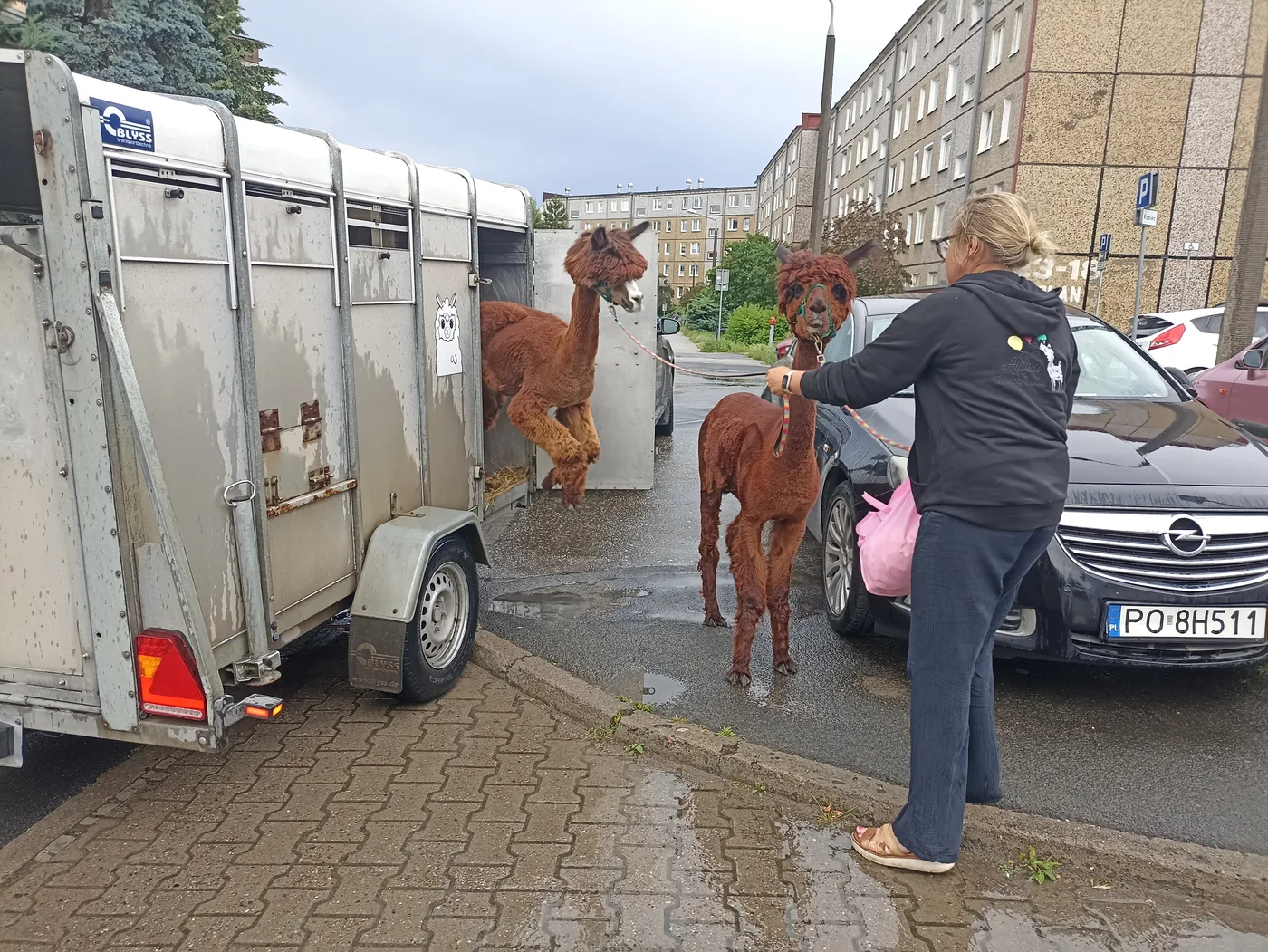
Loading alpacas is easiest when it is familiar rather than rushed. Start practicing well before show day: introduce the trailer while parked, let animals investigate, and reward calm cooperation using handling methods they already know.
- Park on firm, level ground, set the brake, open and secure doors, and check footing and lighting.
- Use a properly fitted halter and lead for supervised handling. Keep handlers out of positions where they could be pinned or kicked.
- Guide alpacas calmly toward a clear ramp or doorway. Do not drag animals by the neck, pull them by the fleece, or force a frightened animal into a dangerous scramble.
- Load animals in a planned order and separate incompatible individuals. Confirm safe positioning and secure partitions before moving.
- At arrival, choose an enclosed unloading area, open doors carefully, and let animals exit without crowding or sudden noise.
A known companion can make travel less stressful for many herd animals. However, traveling with two alpacas is not a universal legal requirement. Consider the animals' behavior and welfare, compatibility, trailer space, and the veterinarian's advice rather than applying a fixed number to every journey.
Transporting alpacas in hot weather
Heat and humidity deserve particular attention in the southeastern United States. A parked trailer can become dangerously hot, and limited airflow makes conditions worse. Plan departures for cooler periods where practical, avoid unnecessary stops, and never assume shade alone is enough to protect animals.
- Before leaving: Check the forecast along the entire route, not just at the farm. If extreme heat is expected, discuss postponement or a safer plan with your veterinarian.
- In transit: Keep ventilation functioning, carry clean water, and inspect animals safely at reasonable intervals. Extended waits or breakdowns need a contingency plan.
- Warning signs: Watch for unusual rapid breathing, open-mouth panting, weakness, distress, or inability to remain upright. These signs can indicate an emergency.
- If heat stress is suspected: Stop in a safe place, move animals out of the hot environment when feasible, begin appropriate cooling measures, and seek urgent veterinary guidance. Do not continue driving as though nothing is wrong.
Recently shorn animals can have different weather-related needs from animals in full fleece. Coordinate shearing schedules, forecasts, and travel plans without assuming that a particular fleece length makes every hot-weather trip safe. See our alpaca shearing guide for general timing and aftercare; this page focuses on travel safety.
On the road: water, monitoring, and emergencies
Drive smoothly, leaving extra braking distance and avoiding sharp acceleration and turns. Alpacas often settle into a cush position, but the driver should not assume every animal is comfortable simply because it is quiet. During longer trips, check welfare and offer water as appropriate to journey length and conditions.
Carry a simple transport kit: accessible paperwork, veterinarian and destination contacts, water and a clean container, familiar feed if the trip warrants it, appropriately fitted halters and leads, first-aid supplies, and a plan for a breakdown. A mechanical failure or severe traffic delay is easier to manage when you have already identified safe places to stop and a way to obtain help.
Do not transport an alpaca that appears seriously ill or unfit without veterinary direction. For late-pregnant females, very young crias, and animals with health problems, agree on the transport decision and safeguards with the attending veterinarian.
After arrival: biosecurity and settling in
Unload into a safe enclosed area, provide water, and let animals settle. Check for injuries or unusual behavior after the journey. Shows and sales bring animals from different farms into contact; clean equipment between groups and follow the receiving farm's or veterinarian's biosecurity plan.
When animals return to their home herd, follow a veterinarian-recommended monitoring or separation plan appropriate to their exposure and health status. New arrivals may warrant additional precautions. For routine husbandry beyond travel, see the alpaca care guide.
Frequently asked questions about alpaca transport
Do alpacas need a health certificate to cross state lines?
Often yes, but the applicable requirement comes from the receiving state and the type of movement. Check the destination state's current camelid rules and ask an accredited veterinarian whether a CVI, permit, identification, or tests are required.
Can you transport alpacas in a horse trailer?
A suitable horse or livestock trailer can work if its floor, ramp, headroom, partitions, ventilation, and doors are safe for alpacas. Inspect and adapt the setup for the actual animals rather than relying on the trailer's label.
Can an alpaca travel alone?
Alpacas are herd animals and many are calmer with a familiar companion. Travel arrangements should account for welfare, compatibility, and space; no general rule requires exactly two on every trip.
How do you load an alpaca into a trailer?
Practice ahead of time, use secure nonslip footing, calmly guide a halter-trained animal, and avoid dragging or rushing. Choose a safe, enclosed area to unload.
What documents do I need for an alpaca show?
For AOA-certified shows, verify the current show handbook and entry packet. A CVI and documented BVDV PCR testing are key requirements; companion animals may also be covered.
How can I prevent overheating during transport?
Plan for cooler hours, provide effective ventilation, avoid leaving animals in a stationary hot trailer, carry water, and have an emergency plan. If an animal shows distress, obtain veterinary help promptly.
References and rule verification
Transport rules and show policies change. Consult the destination state's animal health office and your veterinarian before every interstate journey. The existing sources below provide background and show guidance; current regulations take precedence.