The short answer: alpaca wool is the fleece of the alpaca, shorn once a year. Good alpaca is as fine as merino, has almost none of the lanolin found in sheep's wool and feels smooth rather than scratchy. Whether a particular alpaca sweater itches depends on one number: how thick its fibers are. Below we explain that number, how alpaca compares with merino and cashmere, and how to wash it without ruining it.
What is alpaca wool?
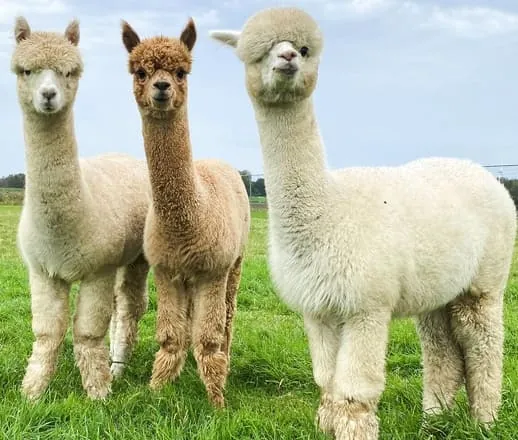
Strictly speaking, alpacas grow fiber, not wool: the word wool belongs to sheep. In everyday speech and on most labels, though, alpaca wool, alpaca fiber and alpaca fleece all mean the same thing, and US textile labeling rules allow specialty fibers like alpaca to be called wool. If you have seen "alpaca fur", that is the same fleece too. Alpacas are never killed for it.
Alpacas are shorn once a year, usually in spring before the heat arrives, which matters a lot in the Southeast. A grown alpaca gives roughly 6 to 9 pounds of fleece a year, in 22 recognized natural colors from white and fawn to brown, gray and true black. Much of it never needs dye.
The two alpaca breeds grow different fleece. Huacaya fleece is crimpy and springy, like a teddy bear, and suits knitting. Suri fleece hangs in long, silky locks with a high luster and suits woven fabric.
How fine is alpaca fiber?
Fiber fineness is measured in microns, thousandths of a millimeter, across a single fiber. The lower the number, the softer the fiber feels and the more it is worth. Fleece from one alpaca can range widely, and fiber usually coarsens as the animal ages.
The Alpaca Owners Association grades US alpaca fiber in steps of about 3 microns. It deliberately avoids trade names like "baby" or "superfine", because those words mean different things in different countries. That is worth knowing when you shop: in the US, "baby alpaca" on a label is a marketing term, not a measured grade, and it has nothing to do with baby alpacas.
| AOA grade | Average fiber diameter | Typical use |
|---|---|---|
| Grade 0 | 15.0–16.9 µm | The finest knitwear |
| Grade 1 | 17.0–19.9 µm | Next-to-skin garments, scarves |
| Grade 2 | 20.0–22.9 µm | Sweaters, hats, gloves |
| Grade 3 | 23.0–25.9 µm | Outer garments, socks |
| Grade 4 | 26.0–28.9 µm | Socks, outerwear, blankets |
| Grade 5 | 29.0–31.9 µm | Rugs, felt, heavy blankets |
| Grade 6 | 32.0–34.9 µm | Rugs, rope, batting |
Grades and ranges: US Alpaca Fiber Standard, Alpaca Owners Association. Typical uses are general guidance.
Is alpaca wool itchy?
Good alpaca is not itchy, but some alpaca is. The itch has little to do with the animal and almost everything to do with fiber thickness. Fibers finer than about 30 microns bend when they touch your skin. Thicker fibers stay stiff and poke, and that is the prickle you feel. Wool labs call the share of fibers at or below 30 microns the comfort factor, and garment fiber should score at least 95%.
So when an alpaca sweater itches, the usual reasons are:
- Coarse fleece. Fiber from older animals, or from the legs and belly, is thicker.
- Guard hair left in. Some alpacas grow a few coarse, stiff hairs. In well-processed yarn they are removed.
- Blends. "Alpaca blend" can mean a little alpaca and a lot of coarser wool or synthetic fiber.
Before you buy, rub the fabric on the inside of your wrist or your neck rather than your fingertips, which are far less sensitive. If the seller can tell you the micron count, under about 22 microns is comfortable for most people.
Is alpaca hypoallergenic?
Alpaca has very little lanolin, the waxy grease in raw sheep's wool that some people react to. That is why many people who cannot wear wool find alpaca comfortable. There is no fiber that is guaranteed hypoallergenic, though, and an itch from coarse fiber is often mistaken for an allergy. If you have a known wool allergy, try a small, fine piece such as a scarf first.
Alpaca vs merino, cashmere and sheep's wool
| Alpaca | Merino | Cashmere | Regular sheep's wool | |
|---|---|---|---|---|
| Comes from | Alpaca fleece, shorn yearly | Merino sheep | Combed or shorn undercoat of cashmere goats | Many sheep breeds |
| Fineness | About 15–35 µm, graded | Most clothing merino under 24 µm | Average no more than 19 µm by US law | Often coarser than 24 µm |
| Lanolin | Very little | A lot in raw fleece, mostly removed in processing | Little | A lot in raw fleece |
| Feel | Smooth, slippery, drapes well | Springy, elastic | Very soft, lofty | Ranges from soft to scratchy |
| Natural colors | 22 colors | Mostly white | White, gray, brown | Mostly white |
| Watch out for | Coarse blends, stretching when wet | Very fine merino can pill | Pills easily, delicate | Prickle in coarse grades |
Alpaca vs merino. At the same micron count they feel similar, but alpaca is smoother and heavier with more drape, while merino is springier and holds its shape better. Merino is usually the better pick for a base layer that gets washed often. Alpaca shines in sweaters, scarves and socks where softness and warmth count most.
Alpaca vs cashmere. The finest alpaca grades overlap with cashmere. Cashmere is loftier and a touch softer at its best, but it pills faster. Fine alpaca tends to hold up longer for everyday wear.
Is alpaca warmer than wool? Alpaca garments are widely described as warmer than wool of the same weight. Some alpaca fibers have a partly hollow core, which traps air, although those fibers also tend to be coarser. In practice, how warm a sweater feels depends as much on its thickness and knit as on the fiber.
Is alpaca waterproof? No. With so little lanolin, an alpaca knit soaks through in rain. Wear a shell over it in wet weather.
Alpaca wool vs llama wool
Alpacas were bred for fiber; llamas were bred to carry loads. A llama grows a double coat of coarse guard hair over a softer undercoat, and the guard hair has to be removed before spinning. Dehaired llama undercoat can be pleasantly soft, but most llama fiber ends up in rugs, rope and outerwear. For anything worn next to the skin, alpaca is the safer choice. More on how the two animals differ in our llama vs alpaca guide.
How to wash alpaca without shrinking it
Heat and agitation are what shrink and felt animal fiber. Treat alpaca gently and it lasts for years.
- Air it first. Between wears, airing a sweater out overnight is often all it needs.
- Use cool water and a wool wash. Avoid enzyme detergents, which break down animal fiber.
- Hand wash. Submerge, press gently, let it soak for up to 30 minutes. Do not rub or scrub.
- Rinse in cool water until no suds remain. Keep the temperature the same as the wash.
- Do not wring. Press the water out, then roll the piece in a towel.
- Dry flat in its natural shape, away from direct sun and heat. Never hang it wet or tumble dry it: wet alpaca stretches.
- Steam, do not iron, and store folded in a breathable cotton bag, not plastic.
Machine washing is possible for some pieces on a cold wool cycle with low spin, inside a mesh bag, but check the care label first. Socks and blends usually tolerate it better than fine knitwear.
Does shearing hurt alpacas?
No. Shearing is like a haircut: the fleece is cut, not pulled, and the animal is back in the pasture within minutes. It is also necessary. Alpacas do not shed, so an unshorn alpaca would overheat in a Southern summer. That is why shearing happens in spring, before the heat sets in.
Buying alpaca from US farms
Most alpaca clothing in stores comes from Peru, home to most of the world's alpacas. US farms produce far less, but many sell yarn, roving and finished goods straight from their own herds, often labeled by the animal it came from. If you want to see the animals behind the fiber, browse our directory of alpaca farms in the Southeast. To learn more about the animals themselves, start with our introduction to alpacas.
Sources
- Alpaca Owners Association: U.S. Alpaca Fiber Standard
- Montana State University Wool Lab: OFDA fiber testing and comfort factor
- Cashmere wool and the US Wool Products Labeling Act
- Wool measurement
- Australian Alpaca Association: Shearing and fibre
- Rutgers Cooperative Extension, Fact Sheet FS917: Llama and alpaca production
- The Laundress: How to wash alpaca
Read next
Llama vs Alpaca: 7 Key Differences
Size, ears, fleece, temperament and ancestry: how to tell a llama from an alpaca in seconds.
Discover Alpacas: Facts About Alpacas
Where alpacas come from, how they live and why farmers in the Southeast raise them.

The Financial Side of Raising Alpacas: Costs, Income and Risks
What alpacas cost to buy and keep, where a farm’s income comes from, and lessons from the alpaca boom.